


This is an area where demanding leg or feet health problems are dealt with holistically.
Podiatry
Professional foot care
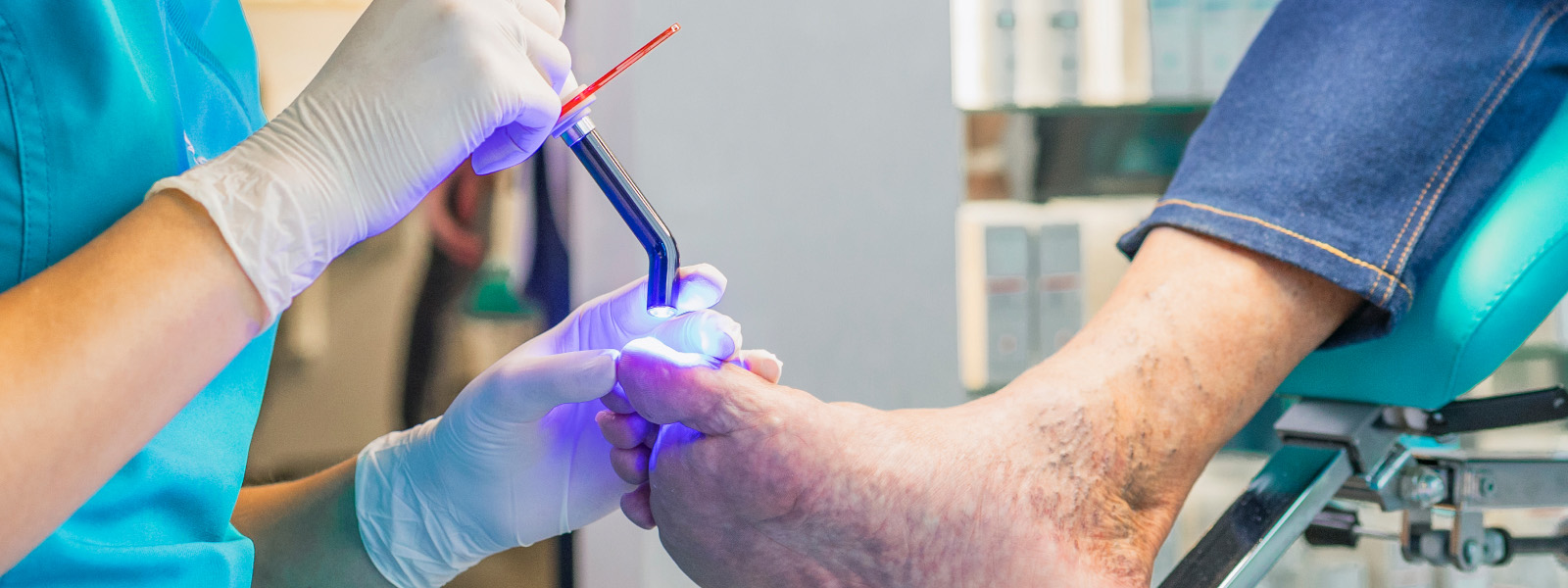
Podiatry deals with the diagnosis, treatment, study, and care of the lower extremities, especially the feet, including non-invasive and minimally invasive procedures. A podiatrist not only takes care of the feet but also timely recognizes changes in the skin and nails that require medical attention. They act as a link between the patient, physicians of various specialties, and other healthcare professionals.
Not sure whether you need a classic pedicure, a medical pedicure or podiatry care? See the difference and indicative prices →
Competencies of a podiatrist
A podiatrist combines in-depth medical and natural science knowledge acquired through a 3-year bachelor’s degree in podiatry. The competencies include:
- assessment of foot skin and nail health,
- recognition of musculoskeletal deformities of the foot,
- various techniques for measuring the feet and plantar pressures,
- pedicure and therapeutic procedures,
- support in the management of musculoskeletal deformities of the feet.
What is podiatry?
Podiatry is a specialized field that identifies, prevents, and treats changes and diseases of the feet. These are often the result of:
mechanical stress (pressure, friction),
dermatological or orthopedic conditions,
chronic diseases such as diabetes,
improper foot care.
Effective treatment requires broad knowledge – from anatomy, physiology, dermatology, and orthopedics to the basics of diabetology and hygiene.
Podiatry differs from classical pedicure: while pedicure focuses primarily on aesthetics, podiatry includes clinical assessment, diagnostics, and a therapeutic approach.
Long-term preservation of foot health
Holistic professional treatment
As part of podiatric care, a podiatrist identifies both early and advanced changes in the skin and nails. They provide advice on hygiene, appropriate footwear, and daily care, implement preventive measures, and, if necessary, refer the patient to a medical specialist.
Common issues treated by podiatrists include:
ingrown toenails,
cracks,
corns,
fungal infections,
nail deformities.
»Based on our experience at the PEDIMED podiatric center, we find that people often seek help too late – when the problems are already affecting mobility. Ingrown toenails are a common and painful condition, but in the early stages they can be treated with less invasive procedures. Understanding the types and stages of ingrown toenails is crucial for successful management.«
Prevention as the foundation of healthy feet
Regular check-ups with a podiatrist allow for monitoring the condition of the feet, early detection of problems, and education on proper care. This is especially important in chronic diseases such as diabetes, where improper care can lead to serious consequences.
Risks of non-professional foot care
Unprofessional pedicure or superficial treatment can lead to worsening of problems or infections. This is particularly true for:
people with diabetes,
elderly individuals,
people with weakened immune systems or circulatory disorders.
In these cases, podiatric care is essential, not just advisable.
Foot health is often overlooked, even though it significantly affects mobility, independence, and overall quality of life. Podiatry, as a professional discipline, provides safe, effective, and long-term management of many common as well as more complex conditions. Through regular care, an individual approach, and proper education, we can make an important contribution to maintaining healthy, functional, and pain-free feet – throughout all stages of life.
KARMEN PERKO
Graduate Podiatrist (BSc)
PEDIMED d.o.o.
What does the owner of the Pedimed Center, graduate podologist Karmen Perko, think about the study of podiatry?
»The profession of podiatrist represents an extremely important branch for the comprehensive management and health of the feet. A podiatrist collaborates with doctors, recognizes various foot deformities and nail pathologies. Around the world, it is a highly respected profession, and I am convinced that, in time, it will also establish itself in its full significance here.«


Certain people require foot care
Which groups of people is medical treatment at a podiatrist suitable for?
- Diabetics at risk of diabetic foot syndrome. Constantly high blood sugar levels cause nerve damage and circulatory disturbances, leaving the skin dry and cracked and prone to sores and injuries. Due to their disturbed sense of pain perception, they are unaware of the problem, until they notice it, which can in severe cases lead to amputations.
- Patients with rheumatic diseases and blood circulation disorders (e.g. venous diseases).
- People with excessively callused skin and corns.
- People with ingrown or deformed toenails, often caused by fungal infections.
- Adolescents and adults with viral warts.
- Athletes with the possibility to develop athlete's foot due to increased sweating.
Our clinics
Where we provide podiatry care
Ljubljana Bežigrad
Peričeva 21, Ljubljana (next to the Bežigrad Health Centre)
Phone: +386 31 796 740
Ljubljana Šiška
Rakuševa ulica 16, Ljubljana
Phone: +386 51 443 100
Novo mesto
Mali Slatnik 13b, Novo mesto
Phone: +386 51 480 800
Opening hours in Ljubljana: Monday to Friday 7 am – 8 pm, Saturday 7 am – 3 pm. In Novo mesto we work by appointment; the clinic is closed on Saturdays. All three clinics are in Slovenia.
You will be treated by podiatrists and medical pedicurists – meet our experts and read how we take care of hygiene and instrument sterilisation.
Related services
You may also be interested in
From our practice


