


Hyperkeratosis or hard corns on the soles of the feet are removed with a scalpel and additional skin softening agents.
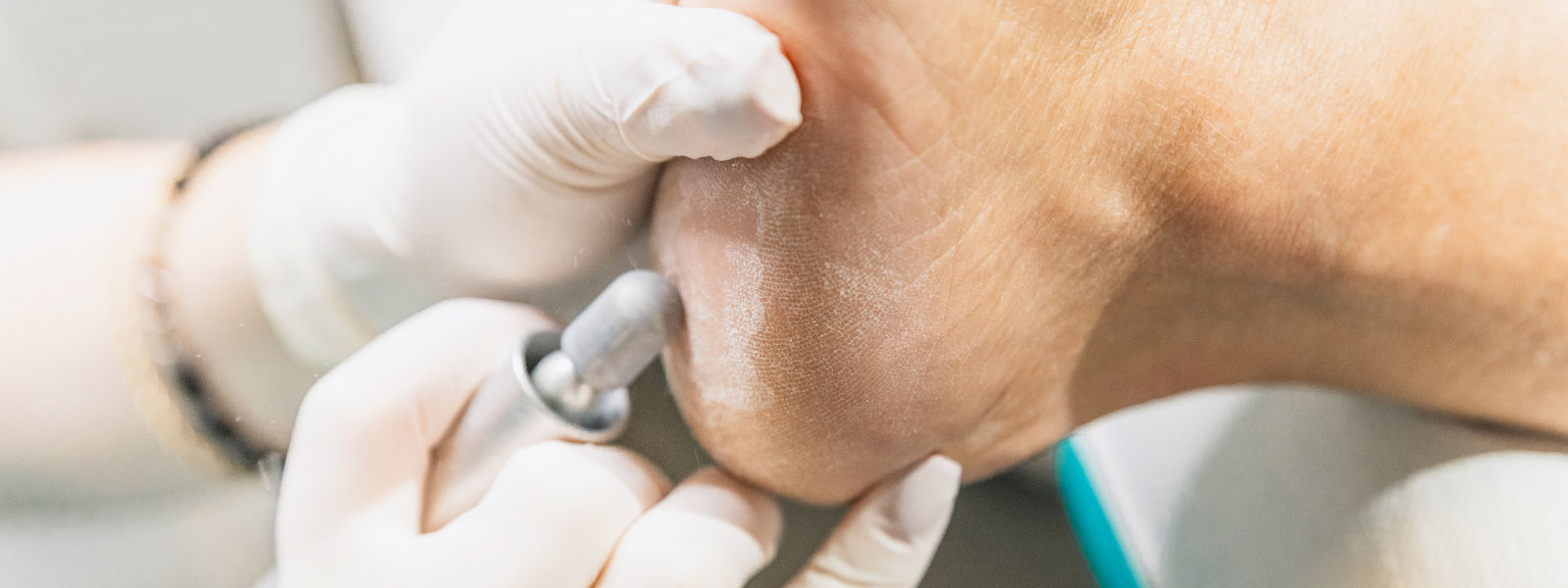
We remove the hard skin on the soles (hyperkeratosis) – We use a scalpel to remove the hard areas of the skin on the foot and, if necessary, agents for additional softening if the skin is extremely hard.
Soles are very exposed parts of the body and carry all our weight, therefore overweight and elderly people potentially have more problems with hard skin. Hard skin on the soles of the feet or hyperkeratosis are scaly cells of dead skin on the epidermis of the skin of the soles. Thicker layers of cells appear most often on the heel, under the toes and on other parts of the feet. Since these are dead cells, it is necessary to remove the hard skin with a scalpel.


CAUSES
Why hard skin forms
Hard skin is the skin’s natural response to pressure and friction. It forms more often because of unsuitable footwear, uneven loading of the foot, dry skin, long periods of standing, higher body weight and with age. It most often builds up on the heels, under the balls of the toes and along the edges of the feet.
WHAT TO EXPECT
How hard skin is removed
- we examine your feet and find out where and why hard skin builds up,
- we soften the skin if needed,
- we remove the hard areas with a scalpel – painlessly, as it is dead skin,
- finally, we apply a care cream and advise you on home care.
HOME CARE
Home care
Care for your feet every day with a urea cream and use a scrub once a week. Do not cut hard skin yourself with razors or sharp tools. If cracks appear on your heels, read more about cracked heels. You will find care products in our online store.
Our clinics
Where we remove hard skin
Ljubljana Bežigrad
Peričeva 21, Ljubljana (next to the Bežigrad Health Centre)
Phone: +386 31 796 740
Ljubljana Šiška
Rakuševa ulica 16, Ljubljana
Phone: +386 51 443 100
Novo mesto
Mali Slatnik 13b, Novo mesto
Phone: +386 51 480 800
Opening hours in Ljubljana: Monday to Friday 7 am – 8 pm, Saturday 7 am – 3 pm. In Novo mesto we work by appointment; the clinic is closed on Saturdays. All three clinics are in Slovenia.
You will be treated by podiatrists and medical pedicurists – meet our experts and read how we take care of hygiene and instrument sterilisation.
FAQ FROM OUR PRACTICE
Frequently asked questions about hard skin
No. We only remove dead, thickened skin, which is not sensitive.
Because the cause – pressure or friction – remains. Suitable footwear, regular care and, if needed, relieving the pressure point with an orthosis all help.
It depends on how quickly it builds up – for most clients, every few weeks to a few months.
Yes. With diabetes, the skin on the feet is more sensitive, so do not remove hard skin yourself; visit us for a pedicure for diabetics.
EXPERT HELP
Didn’t find your answer?
Every foot is different. If you have more questions or would like a personal opinion, book an examination at Center Pedimed – together we will prepare a plan just for you.
help yourself
Visit our online store and shop for foot care products
Among the flood of foot care products, it can be difficult to choose the right one. Trust the experts in the field of medical pedicure and choose among the products from our range of products, which in our opinion reach the highest standard of quality and efficiency.

what customers say about us
Customer reviews
From our practice
How and why does hard skin on the soles of the feet occur?
This phenomenon can be the result of dry skin, due to excessive load on the feet, excessive body weight, inappropriate and too tight footwear and, last but not least, hereditary influences, because hard skin on the soles can also be found by others who do not have the abovementioned problems. It may occur more often in women who wear nylon stockings.
How can we help ourselves?
We should wear suitable footwear which is not tight and is made of natural, breathable materials. Footwear must fit the shape of our foot. Do not try to remove the hard skin yourself at home, as this often leads to injuries. It is necessary to care for the skin with moisturizing and emollient creams intended for hard, cracked skin.
Especially diabetics should take care of their feet. They should wear appropriate socks, comfortable shoes and keep their feet from getting too wet.


