


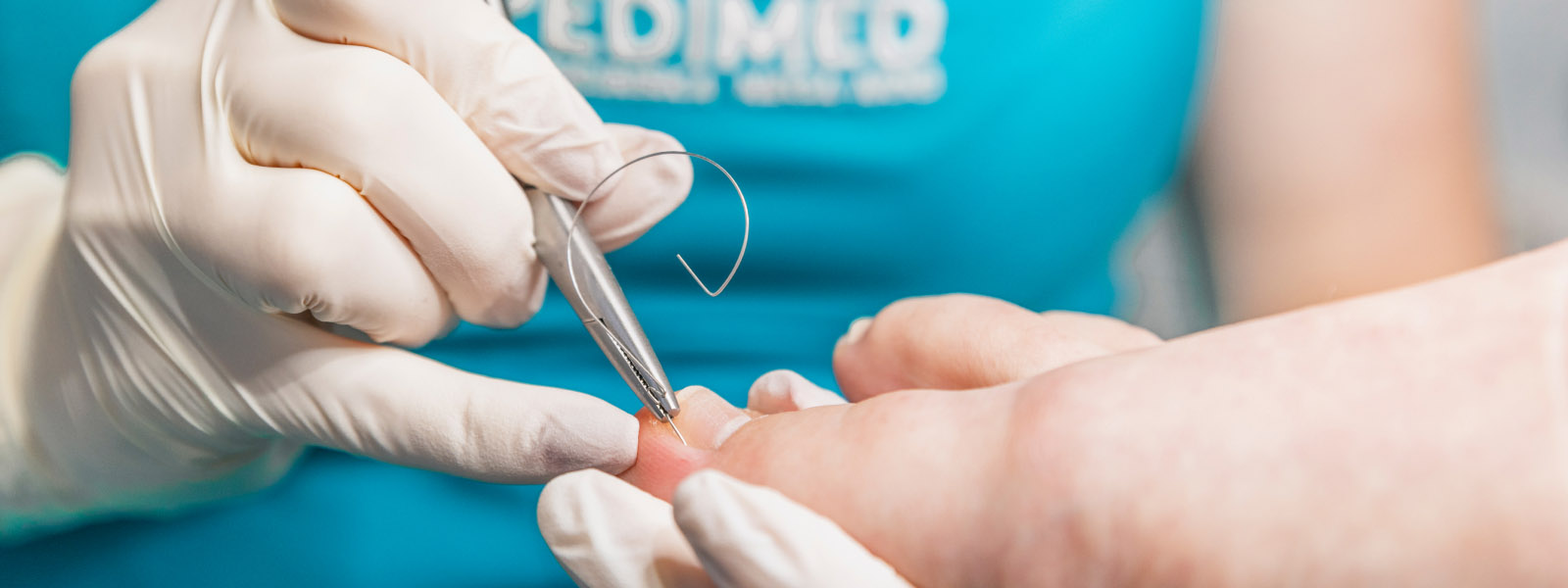
We treat ingrown toenails with various podiatric braces, among which the three-part Podobrace podiatric brace is the most recognized in podiatry
Onychocryptosis is the medical term for an ingrown toenail. The best known form of onychocryptosis is Unguis incarnatus, where the edge of the nail plate presses into the nail tissue distally, medially and/or laterally, causing pain and various signs of inflammation.
- Hypertrophy of the lateral nail fold
- Unguis convolutus - Curved nails
- Unguis concolutus - Cross-curved nails
- Distal ingrowth of the nail
- Unguis inflexus - Spade nails
- Pincer nails – Strongly transformed nail bed and part of the nail plate
- Retronychia – A special type of ingrowth, most often after trauma
Other types of ingrown toenails
- Improper shortening and shaping of the nail plate
- Inadequate footwear and consequently increased external pressure
- Genetic predisposition
- Nail shape (wider nail plates)
- Profuse sweating
- The shape of the lateral nail folds (increased lateral nail folds)
- Injuries – minor repetitive injuries during daily activities and major injuries
- Excess body weight
- Poor tissue circulation
- Infections – as a result of fungal infections
- Nail biting
- Pregnancy
- Deformations of the foot - congenital or acquired abnormalities of the foot (pes valgus, hallux valgus, inflammatory joint diseases)
- Subungual tumors: malignant and benign, often pyogenic granuloma
- Medicines – retinoids, tetracyclines, chemotherapeutic agents, epidermal growth factor inhibitors.
Ingrown toenails are a very common and widespread problem that can significantly affect the quality of life.
Causes of formation
Causes
Injuries, inappropriate footwear, consumption of certain medications, improper nail cutting, heredity, nail growth disorders, diseases,…
Consequences
Pain, inflammation and bacterial infections. Frequent inflammations and damaged skin are the cause of granulation tissue or “wild meat”.
No pain
Painless remediation of ingrown nails, since the pain is effectively reduced without the need for local anaesthesia.
No surgery
With the Podobrace podiatry clip, ingrown toenails are successfully repaired conservatively, therefore no surgical intervention is necessary.
Conservative solution for ingrown toenails at the Pedimed Center
Podobrace podiatry clip
PODOBRACE podiatry clip is made of high-quality implantology steel, which has a CE certificate and is registered as a medical device. In podiatry, it is used for conservative treatment of ingrown nails and is an alternative to surgical interventions. The same type of wire is used in orthodontics and jaw fractures.
The purpose of using the podiatry clip:
Change the way the nail plate grows
To prevent ingrowth of the nail plate into the nail fold
Correction of an irregularly (pathologically) shaped nail plate
No restrictions on life activities
The podological clip is characterized by a high resistance to the load associated with fluid influences and a high resistance to corrosion. The podological clip is biocompatible (non-allergenic material). The clip has high flexibility and the ability to form various types of shape. The podological clip can also be sterilized.
The Podobrace system in Slovenia can be used by doctors, nurses, podiatrists, and cosmeticians after completing specialized training, which provides all the necessary knowledge. The training in Slovenia is offered and organized by PEDIMED d.o.o., the authorized representative of PODOPHARM. The education is led by graduate podiatrist Karmen Perko, who has many years of experience in the conservative treatment of ingrown toenails and in the application of various orthonyxies.


From our practice
Who is the Podobrace podiatry clip intended for?
Podobrace clip is designed for everyone. It can also be worn by children and diabetics. The clip does not cause problems when wearing shoes, playing sports or participating in other activities.
help yourself
At the first sign of inflammation, start using Clinisept+ Podiatry antimicrobial spray
Reduces redness, itching and skin irritation. Promotes natural healing and is suitable for use in case of athlete’s foot, eczema, psoriasis and diabetics.
Destroys 99.99% of microbes, it is dermatologically tested and does not contain aggressive chemicals.

what customers say about us
Customer reviews
Why is surgery not the solution?
In our long-standing practice, clients who have already undergone surgery come to us for help. Otherwise, the practice in Slovenia is to treat an ingrown toenail surgically with nail surgery, but due to the frequent repetition and failure of surgery and permanent deformations of the nail, it is not a favourable solution, and the procedure is also very painful and unpleasant for the client.
You can see after surgery (deformation of the nail) pictures on the ‘Reconstruction of the nail plate’ page, which is later the only possible solution to the situation. In podiatry, ingrown toenails are treated conservatively with a clip, which is a successful painless method also from the perspective of permanent orientation of the nail plate without the need for hospitalization.


