
Onycholysis is a condition where the nail separates from the nail bed. It most commonly starts at the free edge of the nail and gradually progresses toward the root. The nail can change color – turning white, yellow, or even green, depending on the cause.
Although onycholysis is usually painless, it can be an aesthetic concern and increase the risk of secondary infections.
Once detached, the nail typically takes several months to regrow and reattach to the nail bed.
The most common causes include mechanical trauma (impact, pressure from shoes, excessive cleaning under the nail), fungal infections, bacterial infections, skin diseases (e.g., psoriasis), certain medications, and frequent exposure to moisture or chemicals.
Identifying and addressing the cause (e.g., treating fungal infections, adjusting footwear), maintaining proper nail hygiene, and protecting against moisture, avoiding mechanical irritation, and regular monitoring with a podiatrist.

Onychogryphosis is a condition where the nail becomes thickened, hard, and twisted. It most often affects the toenails. The nail can turn yellowish or brownish, and sometimes it curls like a “ram’s horn.”
Since this is a chronic condition, regular care is key. With proper care, you can prevent pain and complications, and maintain healthy feet.
Prolonged pressure from shoes or impact, fungal infection, poor circulation (especially in older individuals and diabetics), nail trauma, and genetic predisposition.
The nail is very thick and difficult to trim, it grows irregularly – downwards or spirally, causing pain and pressure in the shoe, it can hinder walking and cause inflammation around the nail, and secondary fungal infections are common.
Wear comfortable, wide footwear, avoid trying to forcibly trim thickened nails, seek professional help from a podiatrist, and if a fungal infection is present, appropriate treatment is necessary.
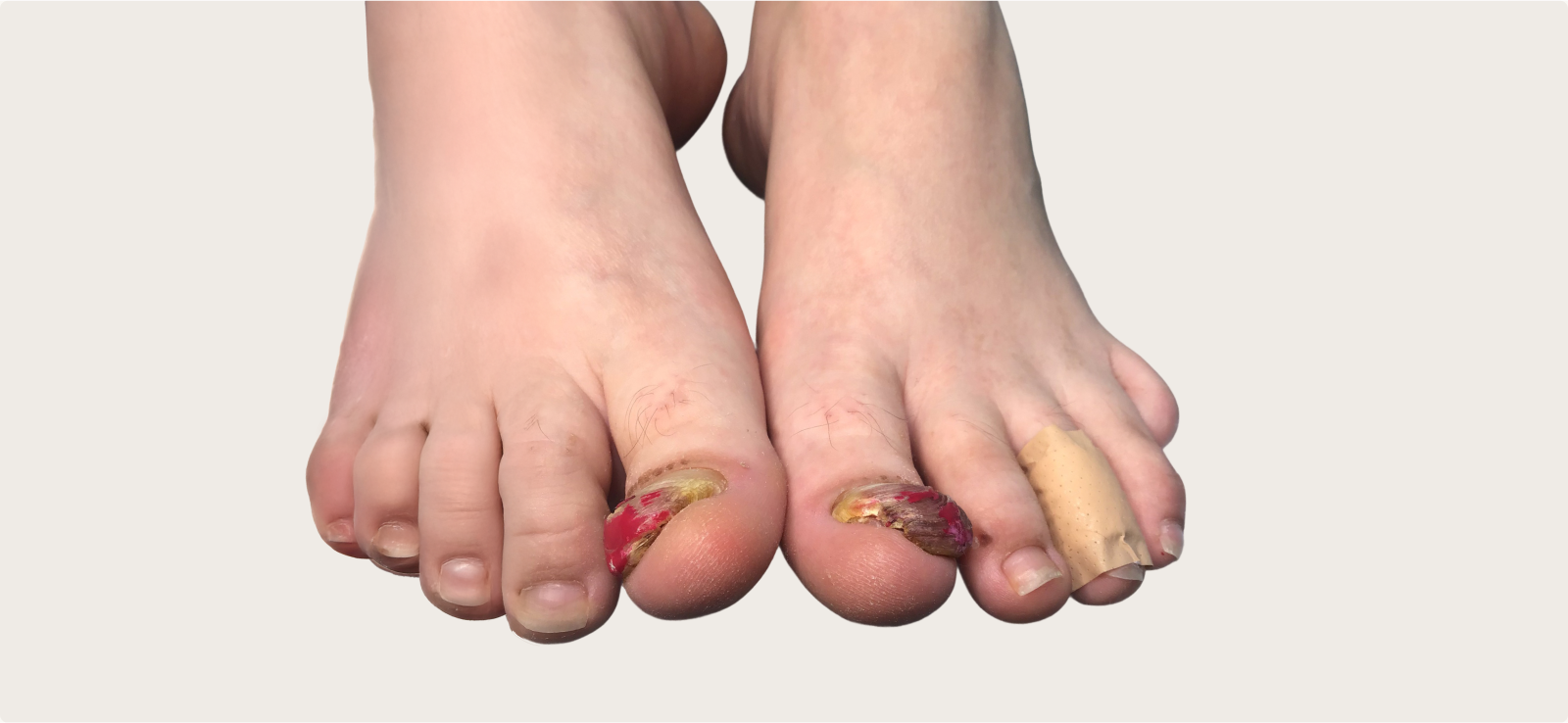
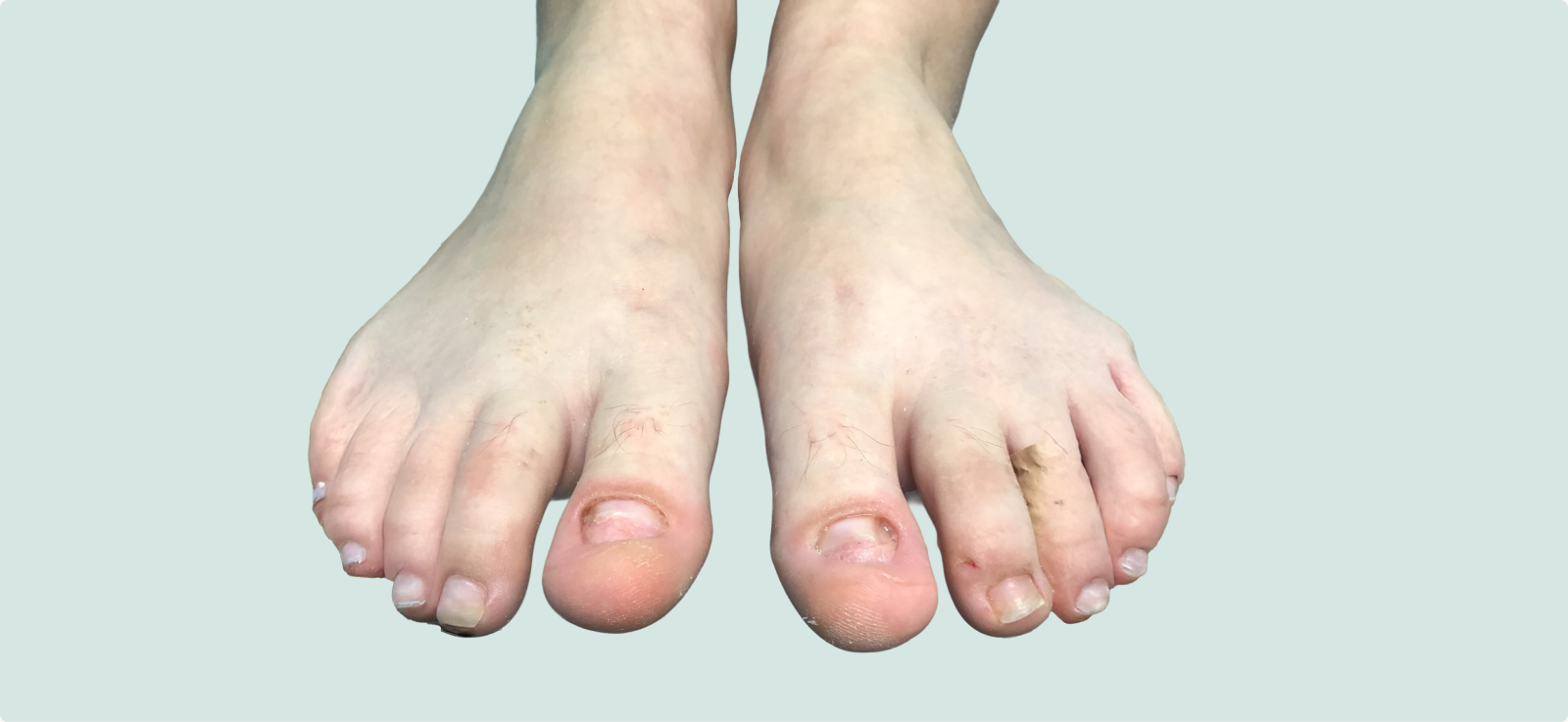
A nail plate is a laminated, keratinized structure that forms a hard protective covering for the finger. It can change due to various injuries. Nail injuries are very common and result from impacts, pressure, sports activities, or ill-fitting shoes.
The nail requires several months to fully regrow after injury. During this time, careful hygiene and protection against infections are important.
Impacts and pressure (e.g., dropping an object on the toe), prolonged pressure from shoes, sports activities (running, soccer, hiking), improper or rough pedicures.
Color change (blue, red, or black spot from bleeding under the nail), nail separation from the bed, cracks, or nail fragmentation, pain and sensitivity, and in severe cases, complete nail loss.
Gently clean and disinfect the affected area, leave the nail alone – do not tear it off, even if it starts to detach, consult a doctor if bleeding is excessive or pain is severe, wear comfortable shoes, and protect the toe from additional impacts.


If you are dealing with nail separation, thickened, discolored, or damaged nails, in our online store you will find a wide range of products for nail care, protection, and support of nail regeneration. The products are intended for daily care and complementary support for common nail concerns.


