


Research from our practice
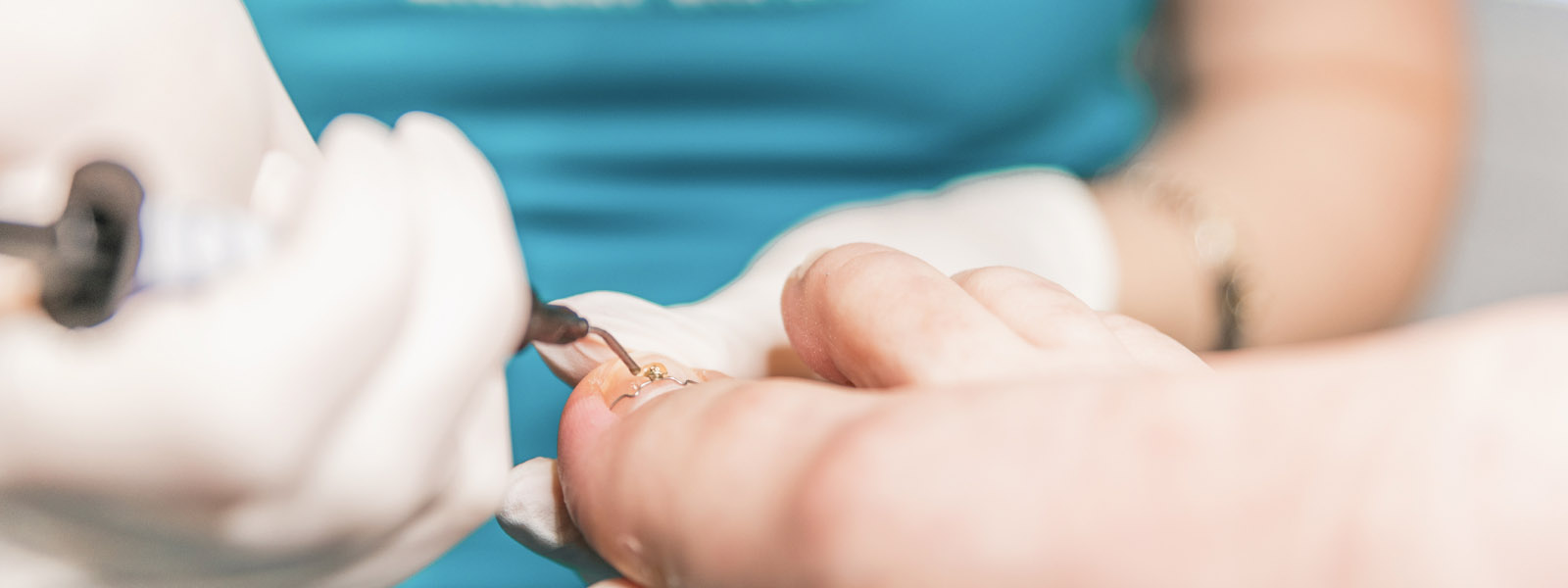
Does a brace really get rid of an ingrown toenail for the long term? And what helps make sure the problem does not come back? These are the questions that Karmen Perko, dipl. podo. (VS), owner of Center Pedimed, set out to answer in her diploma thesis. 64 clients whose ingrown toenails we treated with a three-part brace between 2012 and 2022 – that is, one to ten years after completing treatment – took part in an anonymous survey.
The diploma thesis Spremljanje uspešnosti obravnave vraščenega nohta s tridelno ortoniksijo (Monitoring the effectiveness of ingrown toenail treatment with three-part orthonyxia) was completed in 2025 at VIST – Faculty of Applied Sciences in Ljubljana (Podiatry programme), supervised by senior lecturer Gaja Udovič, mag. kozm. The thesis is written in Slovenian and is freely available in full in the ReVIS repository.
Key findings
- 87% of respondents were satisfied with three-part brace treatment.
- 89% would recommend the brace to friends and acquaintances with an ingrown toenail.
- 69% reported that the ingrowth had resolved after completing treatment.
- In two thirds (66%) of those who completed the full course of treatment, the ingrowth did not recur within a period of up to ten years.
- 96% came regularly, once a month, for check-ups and brace repositioning.
- 96% had no nail damage after treatment.
The results are based on an anonymous survey in which clients assessed their own condition. It is not a clinical study, but an insight into the long-term experience of people who wore a brace.
At the first visit
What problems our clients came to us with
- 41% had been struggling with an ingrown toenail for several years before seeking help.
- 41% had more serious problems when they first came to us – pus discharge or proud flesh (hypergranulation).
- Pain was the most common problem, followed by difficulty walking and limited physical activity.
- 27% had previously tried to treat the nail themselves, and 25% had already had surgery for an ingrown toenail.
- 44% said that their relatives also have problems with ingrown toenails.
The survey shows that people with an ingrown toenail often wait too long. Most of those who recognised the problem early and sought help in time achieved faster and more successful treatment.
After surgery
A brace when surgery did not help
Among respondents who had already had surgery before the brace, more than half had undergone two or more surgical procedures, yet the nail kept growing in again. They most often chose the three-part brace because it allows recovery without surgery, because the procedure is painless, because they can quickly return to their daily activities and because they do not need sick leave.
To find out how the brace is fitted and how much it costs, see Orthonyxia – braces for ingrown toenails.
Treatment duration
How long does brace treatment take?
For most respondents, treatment lasted more than six months: for 42% more than 12 months, for 33% 7 to 12 months and for 21% 4 to 6 months. The nail grows slowly, so the brace gradually guides it into correct growth. The duration depends on the degree of ingrowth, the shape of the nail and any accompanying problems, such as a fungal infection.
Important: if the brace is removed too early, the risk of the ingrowth returning is higher. It is therefore worth completing the full course of treatment.
Prevention
Why an ingrown toenail can come back – and how to prevent it
In about a third of the respondents who completed treatment, the nail later started growing in again – most often just a few months after treatment ended. The most common causes:
- not following the aftercare advice – among those who did not fully follow it, more than half did not wear toe spacers or other splints, and a quarter did not follow the advice on comfortable, wide enough footwear and correct nail cutting;
- fungal nail infection – a quarter of respondents had one, which makes treatment more difficult;
- unknown cause – in more than half of the recurrences the cause could not be explained, which makes regular check-ups all the more important.
How to reduce the chance of an ingrown toenail coming back:
- cut your nails straight across and not too short,
- wear comfortable shoes with enough room for your toes,
- consistently wear a toe spacer or splint if we recommend one,
- treat a fungal infection at the same time as the ingrown toenail (nail fungus),
- complete the full course of treatment and come for a check-up at the first signs of ingrowth.
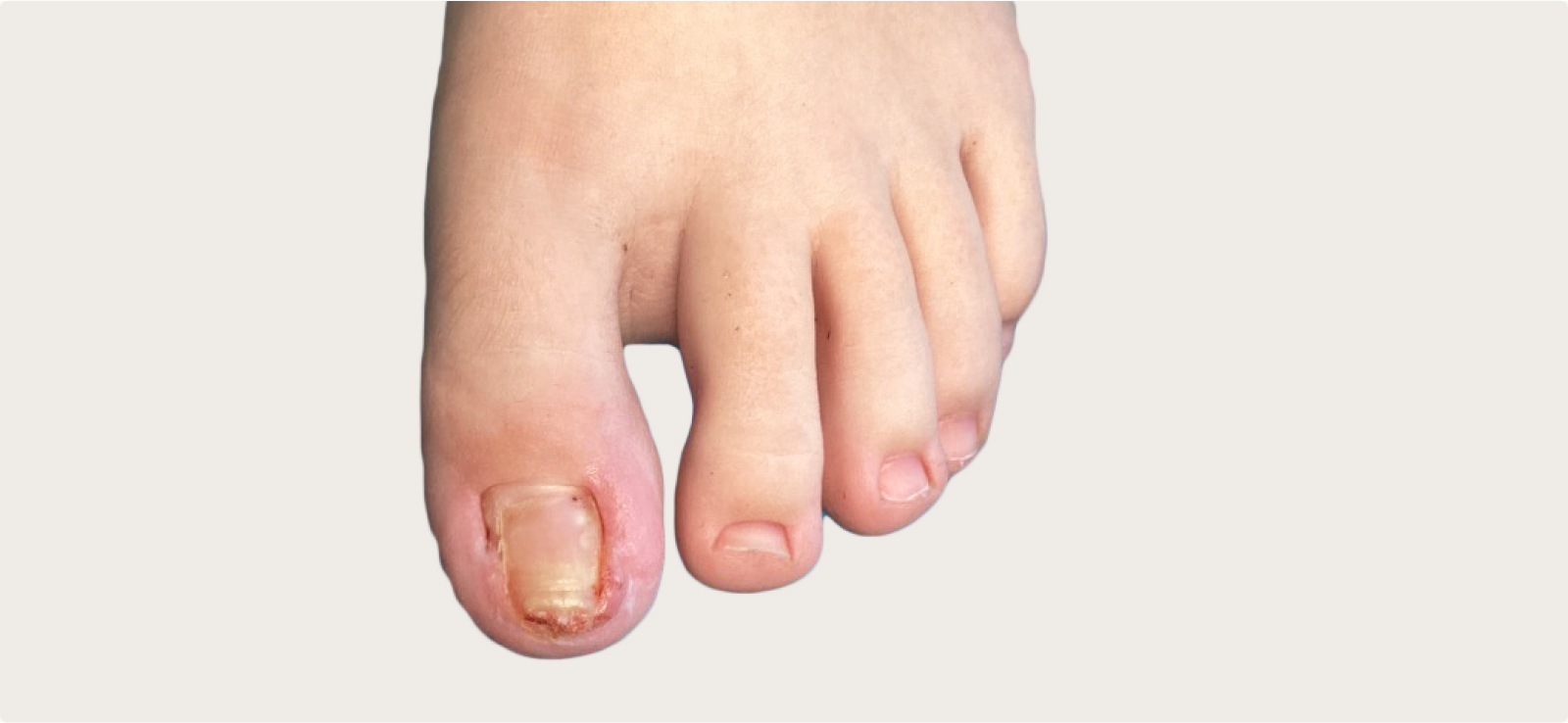
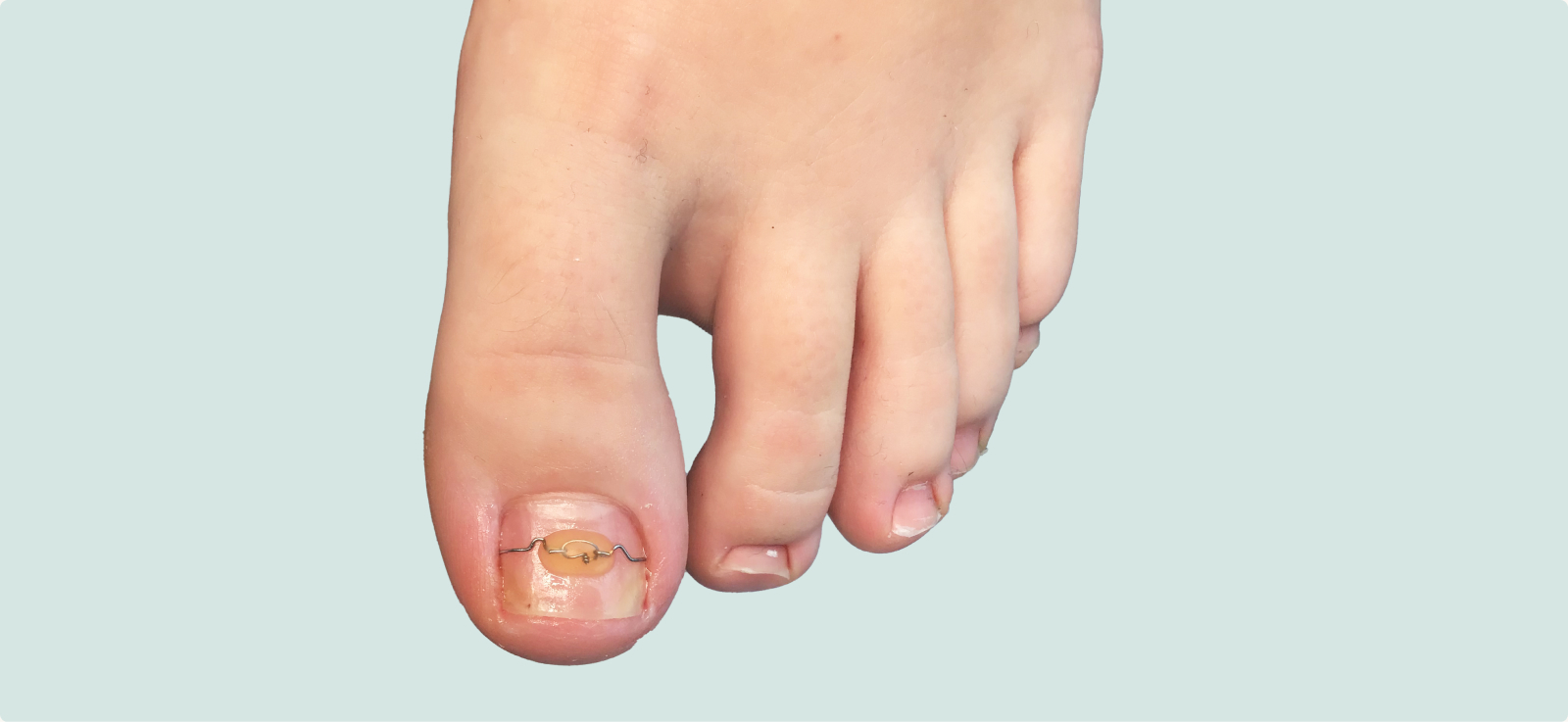
BEFORE AND AFTER
The brace in practice – before and after photos


Ingrown toenail with a brace fitted – at the start and after completed treatment


Severely curved nail – at the start and during brace treatment
About the author
Karmen Perko, dipl. podo. (VS)
Karmen Perko is the owner of Center Pedimed and a qualified podiatrist. She carried out the research as part of her podiatry studies at VIST – Faculty of Applied Sciences in Ljubljana, based on the experience of clients we treated with a three-part brace at Center Pedimed in Ljubljana.
The full diploma thesis (PDF, in Slovenian) can be downloaded from the ReVIS repository.
Citation: Perko, K. (2025). Spremljanje uspešnosti obravnave vraščenega nohta s tridelno ortoniksijo [Monitoring the effectiveness of ingrown toenail treatment with three-part orthonyxia]. Diploma thesis. Ljubljana: VIST – Faculty of Applied Sciences.
FREQUENTLY ASKED QUESTIONS
Frequently asked questions about brace effectiveness
It can. In our survey, the ingrowth later recurred in about a third of clients who completed treatment, most often within a few months. In two thirds, it did not recur within a period of up to ten years. You can reduce the chance of recurrence with consistent aftercare, suitable footwear, wearing toe spacers and treating any fungal infection.
For most respondents, treatment lasted more than six months, and for 42% more than 12 months. In the meantime, we check the brace about once a month and reposition it if needed. You will get an estimate of the duration at your first visit.
Yes. A quarter of respondents had already had surgery before the brace, and more than half of them two or more times. The brace is a non-invasive option when the nail grows in again after surgery.
A quarter of respondents had a fungal infection. The infection makes treatment more difficult, so it should be treated at the same time as the brace and after treatment ends. At Center Pedimed, we can check for nail fungus with the rapid FungiCheck test.
The diploma thesis by Karmen Perko, dipl. podo. (VS), titled Spremljanje uspešnosti obravnave vraščenega nohta s tridelno ortoniksijo, is freely available (in Slovenian) in the ReVIS repository.
EXPERT HELP
Didn’t find your answer?
Every foot is different. If you have questions about an ingrown toenail or the brace, book an examination at Center Pedimed – together we will put together a treatment plan just for you.
Our locations
Where we fit braces
Ljubljana Bežigrad
Peričeva 21, Ljubljana (next to Bežigrad Health Centre)
Phone: +386 31 796 740
Ljubljana Šiška
Rakuševa ulica 16, Ljubljana
Phone: +386 51 443 100
Novo Mesto
Mali Slatnik 13b, Novo Mesto
Phone: +386 51 480 800
Opening hours in Ljubljana: Monday to Friday from 7 am to 8 pm and Saturday from 7 am to 3 pm. In Novo Mesto, appointments are by arrangement and the location is closed on Saturdays. All three locations are in Slovenia.
Related services